Category Archives: Bookkeeping

  • 0

How to Calculate Common Stock Outstanding: A Simple Guide

Category : Bookkeeping

where to find number of shares outstanding in financial statements

If there is a difference between the number of shares issued and outstanding, the difference is treasury stock. In other words, a company has issued shares and then bought some of the shares back, leaving a reduced number of shares that is currently outstanding. Regulatory filings for publicly traded companies enhance transparency and provide additional information about shares outstanding. Documents like the 10-K annual report, the 10-Q quarterly report, and the proxy statement (Form DEF 14A) are particularly useful contribution margin for understanding a company’s equity structure.

How to Derive Outstanding Shares

The treasury stock method (TSM) requires the market share price, which we’ll assume is $40.00 as of the latest market closing date. The number of common shares outstanding at the beginning of the period was 160 million. On the other hand, while calculating the dilutive EPS, the denominator includes all possible conversions that can take place and increase the number of shares held by parties. Diluted EPS is always less than the basic EPS, as the denominator in the latter is higher. Companies with options, convertible bonds, etc., disclose both basic as well as diluted EPS in their financial disclosures. To achieve a proper and fair view of the changes in the number of shares and for the calculation of EPS, the method of weighted average shares outstanding is used.

The Impact of Share Repurchases on Financial Accounting

where to find number of shares outstanding in financial statements

A share repurchase real estate cash flow program is when a company buys back its own outstanding shares from the market, reducing the number of shares outstanding. This can help to increase investor confidence and improve the company’s stock price. We have also discussed the calculation and reporting of shares outstanding and how it can be analyzed and interpreted to gain meaningful insights into a company’s performance. It is important for investors and analysts to carefully review the company’s financial statements and regulatory filings to access accurate and up-to-date information regarding shares outstanding. By understanding how shares outstanding are calculated and reported, stakeholders can make more informed investment decisions and evaluate a company’s ownership structure. The balance sheet provides a snapshot of a company’s financial position, detailing its assets, liabilities, and shareholders’ equity.

Diluted Shares Outstanding

  • This figure is important for investors as it provides an indication of the company’s financial health and can be used to compare the value of different companies.
  • However, the balance sheet does not always explicitly state the number of shares outstanding.
  • A company may have 100 million shares outstanding, but if 95 million of these shares are held by insiders and institutions, the float of only five million may constrain the stock’s liquidity.
  • We have been asked to show how the following transactions will impact the company’s balance sheet and calculate the number of shares outstanding.
  • XYZ then buys back 100,000 shares at $10 per share, spending $1 million of its cash reserves.
  • Shares outstanding refer to the total number of shares owned by investors, while treasury shares are shares repurchased by the company itself.

Stock splits increase the number of outstanding shares of a company by issuing more shares to existing shareholders while maintaining the total value of the shares. The share price decreases proportionally, making it more affordable for individual investors to buy shares. The percentage of ownership for each shareholder remains the same, meaning that the value of each share decreases. Stock splits are a way for companies to increase liquidity and make their shares more accessible to a broader range of investors. When it comes to investing in the stock market, one important concept that investors need to understand is outstanding shares. Outstanding shares refer to the total number of shares of a company’s stock that are currently owned by investors, including institutional investors, insiders, and the general public.

  • The number of shares outstanding is usually listed under the “equity” section of the balance sheet.
  • They also give the opportunity to the shareholders to receive dividends from the company’s profits if it decides to pay them.
  • Authorized stock is the total number of stock or shares that a company is legally allowed to issue.
  • Using the SUMPRODUCT function, we’ll calculate the weighted average shares outstanding over fiscal year 2021, which comes out to 448,265.
  • When companies consider their stocks to be undervalued, they often initiate a share repurchase program, buying back some of their issued shares at a favorable price.
  • After you have the total shares issued and treasury shares, you can use the formula to compute the number of outstanding shares.

Below is a simple example of how to calculate diluted EPS for a company without any preferred shares. Issued shares are the shares that have actually been sold to investors, which can be a subset of authorized shares. Shares outstanding, also known as SO, refer to the total number of shares held by shareholders and the company itself. Authorized shares indicate the maximum number of shares a company can issue, and this number can never be surpassed by the number of outstanding shares. The board of directors or shareholder vote may increase the number of authorized shares, giving the company more flexibility in the future. A company cannot issue further shares without modifying its articles of formation if it reaches its approved share limit, which is the maximum number of authorized shares.

  • Treasury stock is no longer outstanding — the company itself now owns it, not an investor or employee, but it has still been issued.
  • The earnings per share metric, often abbreviated as “EPS”, determines how much of a company’s accounting profit is attributable to each common share outstanding.
  • Outstanding shares are a financial metric that indicates the total number of shares of a company’s stock held by its shareholders.
  • Another metric calculated using shares outstanding is the price-to-book (P/B) ratio.

They also give the opportunity to the shareholders to receive dividends from the company’s profits if it decides to pay them. Remember, how to find shares outstanding it’s important to use the most recent and accurate data when doing these calculations. The number of outstanding shares can change over time due to the issuance or repurchase of shares, stock splits, or other corporate actions. If you know the market cap of a company and you know its share price, then figuring out the number of outstanding shares is easy.

The number of shares repurchased is calculated by taking the strike price multiplied by the new shares—divided by the market share price. The earnings per share (EPS) reported by a company per GAAP accounting standards can be found near the bottom of a company’s income statement, right below net income. The difference between the basic earnings per share and diluted earnings per share is that the latter adjusts for the net impact from potentially dilutive securities.
where to find number of shares outstanding in financial statements

where to find number of shares outstanding in financial statements

Understanding outstanding shares is crucial because it can help investors make informed decisions about buying, selling, or holding a particular stock. In the financing activities section of the statement of cash flows, companies disclose cash inflows and outflows related to their financing activities, including capital raising or share repurchases. If a company issues additional shares, the cash received from the issuance will be recorded as a cash inflow.


  • 0

Economic Lot Size: Factors, Calculations, and Industry Applications

Category : Bookkeeping

Where \( D \) represents the annual demand, \( S \) is the setup or ordering cost per order, and \( H \) is the holding cost per unit per year. This formula provides a starting point for businesses to determine the most cost-effective order quantity. Carrying Cost per piece (in the simplest case) varies directly with batch quantity. It balances the costs of inventory against the costs of setup over a range of batch quantities.

Inventory holding costs represent a significant portion of total inventory expenses and can greatly influence a company’s financial health. These costs encompass various elements, including storage fees, insurance, depreciation, and opportunity costs. Each of these components adds to the overall expense of maintaining inventory, making it imperative for businesses to manage them effectively. Our analysis of inventory models so far has focused on situations where demand was both known in advance and constant over time.

  • In this case, a planning horizon is defined as those periods where demand is known.
  • Each of these components adds to the overall expense of maintaining inventory, making it imperative for businesses to manage them effectively.
  • In this chapter, we analyze problems related to lot sizing when demands are constant and known in advance.
  • Lot-sizing Problems aim to identify optimal production periods and quantities to meet demand while minimizing costs related to production, setup, and inventory.

Economic lot size is the quantity at which ordering and inventory carrying costs are minimized for a group of inventory items. Setup Cost includes the labor and material required to prepare forproduction. There may be costs for charging the production line with productand increased scrap until the line is dialed in. If the line is at or near capacity, overheadcosts should be included as representation of lost opportunity for production whileline is being changed over. Setup cost is averaged over the entire batch toderive the Setup Cost per unit.

Economic lot sizing problem with inventory dependent demand

Since directcost per piece is typically unaffected by lot size, it does not actually affectthe calculation of ELS. Companies must insure their inventory against risks like theft, damage, and natural disasters. The cost of insurance premiums can vary based on the value and nature of the inventory. High-value items typically incur higher insurance costs, making it essential for businesses to balance their inventory levels to avoid excessive premiums.

We now relax this latter assumption and turn our attention to systems where demand is known in advance yet varies with time. This is possible, for example, if orders have been placed in advance, or contracts have been signed specifying deliveries for the next few months. In this case, a planning horizon is defined as those periods where demand is known.

Economic Lot Size: Factors, Calculations, and Industry Applications

Traditional methods face challenges in optimizing production cycles due to their complexity or lack of quality in their solution. Leveraging AI, including Neural Networks, Genetic Algorithms, Deep Learning, and others, offers superior problem-solving capabilities. This paper focuses on evolution of the literature of Artificial Intelligence techniques applied to Lot-Sizing Problems. This paper contributes to AI’s application in Lot-Sizing, emphasizing its role in optimizing production, enhancing decision-making, and addressing contemporary challenges. The findings underscore the importance of integrating AI technologies to navigate evolving complexities in production planning. Setup costs include the labor and material to ready a machine for production.

Setup Cost

Techniques such as cross-training, where workers are trained to perform multiple roles, can further enhance flexibility and reduce the dependency on specialized personnel. Discover how to optimize production efficiency by understanding economic lot size, its calculations, and industry applications. Efficient inventory management is crucial for businesses aiming to economic lot size model minimize costs and maximize profitability. One key concept in this domain is the Economic Lot Size, which helps determine the optimal order quantity that minimizes total inventory costs. ELS is still valid for this situation, as long as average demand can be predicted accurately, and as long as the risk of obsolescence does not increase for larger batch quantities. When inventory drops to zero, it is immediately replenished by the ELS quantity.

Inventory Holding Costs

This approach not only lowers setup costs but also enables quicker response to market demands and shorter lead times. Production setup costs are a significant consideration in manufacturing and can have a profound impact on the overall efficiency and cost-effectiveness of production processes. The frequency and complexity of these setups can vary widely depending on the nature of the production process and the diversity of products being manufactured. The EOQ model assumes a constant demand rate and lead time, which simplifies the calculation but may not always reflect real-world complexities. For instance, seasonal fluctuations in demand or variable lead times can necessitate adjustments to the basic EOQ formula.

  • This formula provides a starting point for businesses to determine the most cost-effective order quantity.
  • Companies must insure their inventory against risks like theft, damage, and natural disasters.
  • Accounting systems usually capture these costs accurately and make them readily available.
  • Tools like Kanban systems can facilitate JIT by signaling when new inventory is needed, thus minimizing excess stock and reducing depreciation costs.
  • Carrying cost is the cost incurred to store a product for the average amount of time that it will be in storage.

Software tools like SAP Integrated Business Planning (IBP) and Oracle Inventory Management Cloud offer sophisticated algorithms to calculate EOQ and other inventory metrics. These tools can handle large datasets and provide real-time analytics, making them invaluable for businesses with complex supply chains. By leveraging such software, companies can automate the calculation process, ensuring more accurate and timely decision-making.

Our objective is to identify optimal inventory policies for single-item models as well as heuristics for the multi-item case. We also present extensions to single-item models with price-dependent demand. Lot-sizing Problems aim to identify optimal production periods and quantities to meet demand while minimizing costs related to production, setup, and inventory. This article explores how Artificial Intelligence (AI) is transforming how the Lot-Sizing Problem is approached in real-world scenarios.

Setup cost per unit is high when batches aresmall and rapidly decreases with increasing lot size. Inventory items, especially those with a limited shelf life or those subject to technological obsolescence, lose value over time. This depreciation can be mitigated by adopting just-in-time (JIT) inventory practices, which aim to align inventory levels closely with production schedules and demand forecasts. Tools like Kanban systems can facilitate JIT by signaling when new inventory is needed, thus minimizing excess stock and reducing depreciation costs. This model calculates the total production cost per unit over a range of batches.

They may include the processing of work orders or a first-article inspection. We amortize these costs over the entire batch to derive the Setup Cost per piece. This cost is high when batches are small and rapidly decreases with increasing batch quantity. Accounting systems usually capture these costs accurately and make them readily available. In the figure, direct cost per piece is a horizontal line for all batch quantities. Direct costs are generally directlyproportional to the amount produced, such as materials and direct labor.

Then we look at coordinating the ordering of several items with a warehouse of limited capacity. Production planning is also an area where difficult combinatorial problems appear in day to day logistics operations. First we consider the most basic single-item model, the Economic Lot Size Model. The inputs to the economic lot size model include direct cost, setup cost, and carrying cost. Direct cost includes the cost of the materials and labor required to manufacture a product, while setup cost includes the cost to prepare a machine for the production of a batch. Carrying cost is the cost incurred to store a product for the average amount of time that it will be in storage.

Production planning is also an area where difficult combinatorial problems appear in day-to-day logistics operations. In this chapter, we analyze problems related to lot sizing when demands are constant and known in advance. Lot sizing in this deterministic setting is essentially the problem of balancing the fixed costs of ordering with the costs of holding inventory. In this chapter, we look at several different models of deterministic lot sizing. First, we consider the most basic single-item model, the economic lot size model.


  • 0

Costs to Factor in to Owning an Eco Home

Category : Bookkeeping

Unfortunately, Triump is not transparent about its fees, which makes shopping for factor financing more difficult than it should be. Sana Siddiqui is a full-time Research Analyst at Investopedia with over 10 years of experience focusing on financial products and services. She has a bachelor’s in communications from Southern New Hampshire University.

Only one other company matched its 100% invoice advance rate (most companies quote a range between 80%–90%) and its factor fee of 2.75% per month is competitive. FundThrough is Investopedia’s pick for best overall because of its low factor fee, high advance rate, and invoice management and customer service options. The service fee is the fee charged for delivering the facility, management and admin costs related to the clients account. Origination fees, otherwise known as draw fees, are flat rates that are assigned per invoice.

Understanding Factoring Fees and How They Work

After setup, enjoy 80-93% of the invoice value on the same day with the best invoice factoring rates. Borrowing money for small business funding is stressful, and Bankers hopes to reduce that stress. Student loans can negate a bank loan while Bankers Factoring can still help you with unpaid student loans. Invoice factoring, also known as accounts receivable factoring, is a financing option that enables businesses to sell their unpaid invoices to a factoring company at a discount. The factor assumes the responsibility of collecting payments from the customers on the invoices they purchased, providing businesses with immediate working capital. This advance allows companies to manage operational costs effectively, without waiting for the client’s payment which may take 30, 60, or even 90 days.

As noted above, your invoices must be sent to both customers and your factoring provider before advance payment is available. If invoices are incomplete — for example, if they’re missing data or the data provided isn’t accurate — your factoring company won’t process them. This is because you are selling your debt to other companies for collection.

Overall, factoring is less concerned with your firm’s overall creditworthiness, compared to traditional financing options. Rates are determined more by the invoice specifics, and the creditworthiness of your customers. Along with invoicing factoring, there are other options to help finance your business. Common examples include business loans, lines of credit, and what’s known as invoice financing. In a recourse agreement, your business is responsible for covering the cost of an invoice if the customer refuses to pay.

This is a great option for the business because it can sell its invoices and pay for a fee only when needed. Some invoice factoring companies work on a flat-fee basis, rather than on a percentage discount rate. This can have it’s attraction, particularly if you are unsure of customer payment reliability.

Understanding these costs will help you evaluate if factoring is the right choice for your business. As a business owner, evaluating cost of either factoring invoices with a reliable positive cash flow or not, the real answer is only the business owner can put a price tag on that. Invoice discounting careers offer dynamic opportunities in finance, involving roles like compliance analysts and accounts receivable managers to improve business cash flow by unlocking funds from unpaid invoices…. By taking these steps and conducting thorough research, businesses can safely navigate the waters of factoring fees, avoiding pitfalls that could lead to unnecessary expenses.

Considering the influential role of factoring in cash flow management, it’s essential for businesses to weigh the benefits of immediate cash against the fees incurred. Adequate planning and calculating the difference between the factoring costs and the operational gains due to improved cash flow are vital to making the most out of factoring services. Factor fees refer to administrative charges, processing fees, account setup costs, and other hidden fees from your factoring company. Bankers Factoring protects our clients with bad debt protection, no hidden fees, and rates starting at .9-1.6% per 30 days.

Four main criteria determine invoice factor rates for invoice funding services from invoice factoring companies:

As well as the cost of buying or adopting, there are other additional costs to consider before even bringing the dog home. You will need to have some food for at least the first few days, and crate training can help settle the dog in and give a good start to stress-free living. Federal and state tax credits for solar installations, low-interest “green” loans, and local rebates for energy-efficient appliances can ease the financial sting. Research your options thoroughly—unless you enjoy the thought of leaving free money on the table. A little extra detective work can mean fewer midnight meltdowns about your budget spreadsheets and more time high-fiving your spouse over how eco-savvy you both are. First off, let’s banish the idea that eco homes are always cheaper in the long run.

Collection fees

Look out for any clauses that may affect your business, such as minimum invoice requirements or long-term commitments. To connect with altLINE, you can call their dedicated customer service line for direct assistance. The lines are open during regular business hours to provide immediate support and answer any questions you may have. The pancakes came with a scoop of sweet butter and syrup on the side, adding concentrated sources of excess calories and sugar. Breakfast items also seemed to have a lot more preservatives and ingredients like olive pomace oil, much inferior to extra virgin or virgin olive oil. This was surprising from a company claiming to offer nutritionally balanced meals.

It’s critical to understand the total costs of factoring and the role of a reputable provider in delivering consistent invoice factoring services that don’t break the bank. Factor financing allows businesses to get cash by selling their invoices to a third party, known as a factor. The business assigns invoices to the factoring company, which advances the business a percentage of the total amount (usually 70%–95%) and collects what’s owed. When the client pays, the factor takes its fee and forwards the balance to the business. There are two types of credit checks the invoice factoring company may need to make – credit checks on you, and credit checks on your customers who have outstanding invoices. These credit checks will incur fees that the invoice factoring company may choose to pass on to you.

Ways to Lower Factoring Costs

  • This is a great option for the business because it can sell its invoices and pay for a fee only when needed.
  • While credit checks and historical payment data can help lower the risk of non-payment, factoring companies charge significantly more for non-recourse factoring to offset the potential loss.
  • To help support these claims, the Factor website has detailed information about ingredient sourcing, ingredient selection criteria, and how the meals are nutritionally balanced.

While this immediate injection of cash can be a lifeline for operating expenses and growth initiatives, it’s vital to understand what is the cost of factoring what it costs to get this advance. Factoring companies charge rates based on a percentage or discount to finance your business. A/R factoring rates are usually charged on your gross monthly sales over a set period. For example, a factoring company may charge 2% for 30-days and then 1.25% per 10-days following.

  • As for Trump’s tariffs, that is unlikely to be a driver of this price bump.
  • A little extra detective work can mean fewer midnight meltdowns about your budget spreadsheets and more time high-fiving your spouse over how eco-savvy you both are.
  • The business assigns invoices to the factoring company, which advances the business a percentage of the total amount (usually 70%–95%) and collects what’s owed.
  • Obviously, if the invoice factoring company has to wait 40 days for payment instead of 30 days, then that’s going to cost you more.
  • Factoring is available for truckers in the U.S. and for those working in Mexico, too.

Yes, it’s true that over time you might cut down on your energy bills, but the initial price tag can be higher than a giraffe’s daydreams. All those fancy eco-friendly features—like high-grade insulation, triple-pane windows, and responsibly sourced hardwood—tend to cost more up front. The key is to view these expenses as long-term investments in lower energy costs, better air quality, and the peace of mind that comes from knowing your living space is a tad gentler on the planet. Factoring companies look at the credit information and payment history of your customers more than your company’s own credit. In the example below, our invoice amount is $10,000 with a factoring rate of 2.5% and an advanced rate of 85%.

Traditional bank loans involve interest rates, which can vary based on the business’s creditworthiness and the term of the loan. Some confusion may be caused when a factoring company offers tiered fee structures and gives the business owner a price break if the client (account debtor) pays the invoice earlier than expected. For example, instead of the flat 3% fee like mentioned earlier, the factoring company may offer 1.5% for every 30 days the invoice remains outstanding. This give the business owner a price break if the client pays under 30 days.

You can’t customize the meals you order (because they’re premade), but you can order multiple portions of the same meal and choose meals from the entire menu, not just from your specific plan. While there is no doubting this breed’s intelligence, the Husky can also be somewhat stubborn and even a little difficult, which will make training and socialization especially important. Puppy classes do cost money every week or two, but they could save you money in the long run because a well-trained dog is less likely to develop expensive behavioral issues. If you have willing or experienced Husky owners in the family, ask for their help when you need doggy daycare, walking, or boarding. And rather than paying for one-on-one training sessions, consider signing up for group training, while learning to groom effectively at home.

Also, high concentration can increase rates if you are selling invoices from just one customer. Selling invoices from multiple customers lowers your concentration and monthly charges. You will hear the terms invoice factoring and invoice financing used interchangeably. Typical, invoice financing is a line of credit or asset-based lending facility (ABL). In contrast, invoice factoring is the purchase of your good, and unpaid receivables on either a recourse or non-recourse basis by a factoring company. Your credit and time in business will also decide your choice of invoice factoring vs. invoice financing or ABL as a business owner.

The price of Mario Kart World shocked gamers and led to some disdain, as the $80 MSRP was $10 more than what most new games cost today. This led many to wonder if this would be a new normal for game prices due to Trump’s tariffs or if Nintendo was just being greedy. Wednesday’s reveal of the Switch 2 had a lot of buzz from Nintendo surrounding its successor to the Switch. There’s a lot of confusion, especially with news of President Donald Trump’s increased tariffs on many trading partners, including Japan. A range of services are also imported from the US, including financial, travel and computer and information services. Keep reading the full article, Understanding Factoring Rates and Fees and how to offer payment terms to grow your small business safely.


  • 0

Property Management Bookkeeping Process

Category : Bookkeeping

property management bookkeeping

These reports help evaluate the property’s financial performance and ensure transparency with stakeholders. Accurate budgeting for capital improvements, such as HVAC systems or roofing, helps property managers plan for the future. Bookkeepers track these expenditures to ensure compliance with financial agreements or reserve requirements.

Features to look for:

property management bookkeeping

You will get all of this and more for less than the cost of an aministrative assistant. We handle trust accounting with the utmost diligence and care to ensure your expenses are properly managed and accounted for. Skipping regular bank reconciliation can lead to discrepancies between your records and your actual bank balance. Make it a habit to record expenses accurately and categorize them correctly in your accounting system to simplify tax filing. Implementing these best practices will streamline your accounting processes, help you avoid common pitfalls, and give you the confidence to make sound financial decisions. Visually, a chart of accounts property management bookkeeping is just a list of your various financial accounts, typically using a number system to organize those accounts.

Managing Assets and Liabilities

property management bookkeeping

At APM Help, we ensure transparency and assigning each customer a dedicated account manager as their single point of contact. Our customers also benefit from our 100% pass rate for trust account audits since 2017.Let’s get started now – the first 30 minutes are on us. Be sure it’s liquid, or you’re able to tap into it with no risk of penalties or fees. Advisors typically recommend three to six months of expenses in your rainy day fund. We’ve put Accounting Security together a guide on setting up an air-tight chart of accounts that will walk you through everything you need to know, with expert advice and even an itemized list of what to include.

Dividends: Impact on Financial Statements and Shareholder Equity

property management bookkeeping

Property managers should produce comprehensive financial reports on a monthly retained earnings and quarterly basis. These reports provide an overview of income, expenses, cash flow, accounts receivable/payable, and other key metrics for each property and the overall portfolio. Monthly reports help identify issues early, while quarterly reports spot longer-term trends. Managing tenant and owner funds separately from your business income is crucial, but staying compliant can be difficult.

  • As you implement the above rental property accounting best practices and scale your portfolio, you will thus be required to grow your finance team.
  • Accurate and organized record-keeping is crucial for managing taxes effectively.
  • Focus on your business, and leave the books to us – including property bookkeeping, daily bank reconciliations, corporate accounting, and more.
  • Once you have good tenants, take care of them with prompt maintenance and excellent service to discourage turnover.
  • You can have a checking, and a savings account for personal use and business.
  • AppFolio is a powerful property management software that serves both residential and commercial property managers.
  • Select accounting software that suits your property management Bookkeeping needs.

Best Practices

Many jurisdictions mandate that security deposits be kept in separate escrow or trust accounts to prevent commingling of funds. For instance, New York requires managers to provide tenants with written information about the bank and account where their deposit is held. Some areas also stipulate that interest earned on these accounts be returned to tenants. Property management accounting is key to successful and profitable property management. By understanding basic accounting principles and terminology, and by implementing some fundamental accounting processes, property managers can competently manage their own accounts.

property management bookkeeping

  • Additionally, these services often come with robust security measures, safeguarding your sensitive data.
  • Velan has been able to develop alongside us as we transitioned from a single product to a multi-product business.
  • Additionally, reviewing expenses from the previous year, particularly the unexpected ones, can aid in estimating sufficient reserves to cover comparable costs for the upcoming year.
  • Also, it reduces the risk of human error in your data, financial reports, and calculations.

Effective accounting also informs strategic decision-making, allowing property managers to assess property performance, plan for future expenses, and optimize cash flow. Whether managing a single property or a portfolio, well-organized financial records are the cornerstone of a successful property management business. QuickBooks is one of the most popular accounting solutions, widely used by small to mid-sized property management businesses.

property management bookkeeping

Michigan Property Management Firm Enlists Velan for Cleanup & Retainer Services

‍Manually handling rent collection, expense tracking, and vendor payments can increase administrative costs. Reliable property management accounting software automates these tasks, reducing overhead and freeing up time and resources for business growth. The best accounting software for property managers offers features like rent tracking, expense management, owner reporting, and bank reconciliation. Platforms like DoorLoop are designed specifically for property management, making it easy to handle both accounting and day-to-day operations in one place. Other popular options include Buildium, AppFolio, and Rentec Direct, depending on your portfolio size and budget. You should choose reliable accounting software that supports property management functions such as rent collection, expense tracking, and financial reporting.


  • 0

Impairment of Assets Meaning, Accounting Examples, Indicators

Category : Bookkeeping

Whether an asset should be impaired and how much should be impaired is determined by the accounting rules. Depreciation follows a systematic, predetermined schedule to allocate an asset’s cost over its useful life, reflecting expected wear and tear from normal use. For example, when a delivery company purchases a new truck for $50,000 with an expected five-year life, it might recognize $10,000 in depreciation annually regardless of the truck’s actual market value. This happens predictably whether business conditions are favorable or challenging. The distinction between depreciation and impairment reveals management’s assumptions about market conditions.

Record the Impairment Loss

In the last five years, however, Truck Drivers have seen their revenues significantly fall as they have lost market share to newer delivery companies using tech-orientated delivery services. This has allowed these companies to provide more efficient delivery services at lower costs. For example, Truck Drivers Inc. is a logistics company that has been in the truck delivery service for 50 years. The company has always had strong demand and provided excellent delivery services for its customers. Once the recoverable amount is known, compare it to the carrying value of the asset. If the carrying value of the asset is higher than the recoverable amount, the asset is impaired.

Impairment vs Depreciation vs Amortization

  • To mitigate this, companies must test their assets for potential impairment on a regular basis.
  • Sometimes, however, companies must recognize an impairment against the asset under various circumstances as well.
  • For example, this enables them to identify whether the managers responsible for writing down or writing off assets failed to make the right decisions owing to the abrupt drop in the value of an asset.
  • An impairment loss occurs when the carrying amount of an asset is greater than its recoverable amount.
  • By recording the loss in value, the financial statements reflect the diminished utility of the equipment.
  • Impairment losses impact a company’s financial statements significantly as they lead to both a reduction in the carrying amount of an asset and an expense on the income statement.

Real estate investments are tested at least annually if they are held for investment purposes. However, those that are used in a business are tested when certain conditions are met, such as changes in occupancy level or significant changes in market rents. On reversal, the asset’s carrying amount is increased, but not above the amount that it would have been without the prior impairment loss. If a client defaults, the business can write off the amount of their account.

  • Adjust the carrying amount of the asset to its recoverable amount, i.e., write down the value on the balance sheet.6.
  • Company A ltd purchased company B ltd and paid $ 19 million as the purchase price for buying company B ltd.
  • This process ensures that an asset’s carrying amount, or book value, does not exceed its fair value – the present worth of estimated future cash flows and its expected residual value at the end of its useful life.
  • The overall profit, cash flow, or other benefits that the asset can produce are periodically compared to its existing book value when an asset is tested for impairment.

Businesses should continuously monitor assets for impairment to enable timely loss recognition and informed strategy changes when declines occur. With diligent impairment testing, companies can make the most of available information to drive decisions. As per the Generally Accepted Accounting Principles, companies are required to test the goodwill and other certain intangible assets every year for the impairments. So, after a year, Company A ltd. will compare the fair value of its subsidiary company B ltd., With the carrying amount present on its balance sheet and goodwill. In case the fair value of B ltd. is less than its carrying value of the A ltd, then it is liable for the impairment.

Impact of Depreciation on Asset Impairment

For instance, if an infrastructure company’s outdoor equipment gets damaged owing to a natural disaster, the assets’ fair value will decrease significantly and fall below the book value. On the balance sheet, depreciation reduces the net book value of the asset over time. However, depreciation is based on the initially expected decline in value, while impairment recognizes an accelerated, unexpected decline in value. Depreciation is an accounting method of allocating the cost of a tangible or physical asset over its estimated useful life. The purpose of depreciation is to match the cost of the asset to the revenue it generates over its lifespan.

Impairment is not limited to fixed assets; intangible assets, such as goodwill, can also undergo impairment testing. In accounting, the process of identifying and writing down the value of an asset when it falls below its book value is referred to as impairment. It’s essential for companies to perform impairment tests regularly to ensure that their assets’ values on the balance sheet are accurate and not overstated. When testing assets for impairment, businesses periodically compare the assets’ overall cash flow, profit, and other benefits with their current book value. Companies write off the difference if an asset’s book value exceeds the asset’s future cash flow or other benefits. Businesses can record instances of impairment from time to time to ensure they maintain accurate balance sheets.

Criteria for When Reversal of Impairment Loss is Permitted

Impairment charges can signal industry disruption, technological obsolescence, management investment missteps, or changing market conditions. An impaired asset is machinery, equipment, real estate, patents, or any other company asset that has lost value. An impaired asset is a company asset that has declined in value and is no longer worth its original cost. CAs, experts and businesses can get GST ready with Clear GST software & certification course. Our GST Software helps CAs, tax experts & business to manage returns & invoices in an easy manner.

Accounting Journal Entry

The potential impairment may also occur if the asset is disposed of earlier than the expected disposal date. Examples of asset accounts that are likely to become impaired are goodwill, accounts receivable, and fixed assets. An impairment is a concept in financial accounting that helps a business to calculate its actual net worth.

Tax Acts

If the carrying amount exceeds the recoverable amount, calculate and record the impairment loss.5. Adjust the carrying amount of the asset to its recoverable amount, i.e., write down the value on the balance sheet.6. Impairment occurs when an asset’s carrying amount (book value) exceeds its recoverable amount, requiring a write-down in the financial statements. Under IAS 36, this applies to tangible and intangible assets (e.g., machinery, goodwill).

Things that cause impairment internally include physical damage to the asset, causing a reduction in its value. Furthermore, any asset, whether tangible or intangible, can suffer impairment. Therefore, IAS 36 requires companies to record the impairment whenever it occurs.

Impairment testing can be performed at various intervals depending on the specific circumstances and industry practices. Annual or more frequent testing may be required for certain assets, such as intangible assets like goodwill. GAAP provides companies with the flexibility to choose any method that best reflects the fair value of the asset, as long as it is applied consistently over time. Furthermore, companies must disclose in their annual financial statements if there have been any impairments recognized during the period and the nature of those impairments.

Conversely, ignoring or underreporting these losses could lead to an overstatement of a company’s assets and potentially mislead investors and analysts. When it comes to maintaining accurate financial statements, it’s crucial to account for any declines in the carrying value of assets. This process involves testing assets for impairment and recording any necessary losses.

This loss is then recorded as a charge against current period earnings on the income statement, while the affected asset’s carrying amount is reduced in the balance sheet. The recognition impaired asset definition and recording of impairment losses play an essential role in ensuring that financial statements provide accurate and reliable information to investors, lenders, and other stakeholders. By following GAAP guidelines and performing periodic evaluations of assets, companies can maintain a strong foundation for making informed business decisions and communicating their financial position effectively. Impairment refers to a permanent decrease in the value of an asset below its carrying amount, which is the value reported on a company’s balance sheet. The concept of impairment is essential to maintain accurate financial statements and fair representation of assets on a company’s books. In this section, we will delve into the definition, types, and implications of asset impairment, exploring its relevance within accounting principles.

Hence, individuals can find impairment charges under the operating expense section of a corporate income statement. If the asset’s carrying value exceeds recoverable value, an impairment loss exists. A significant or prolonged decline in the fair market value of an asset below its carrying value on the books is one of the most common triggers for impairment testing. For example, if the market value of a piece of machinery declines due to technological advancements that make it less productive compared to newer models, impairment may need to be recognized. In summary, impairment is an unexpected loss in asset value, while depreciation is an expected decrease in value over time.


  • 0

Depreciation and Its Types in Bookkeeping: A Comprehensive Guide

Category : Bookkeeping

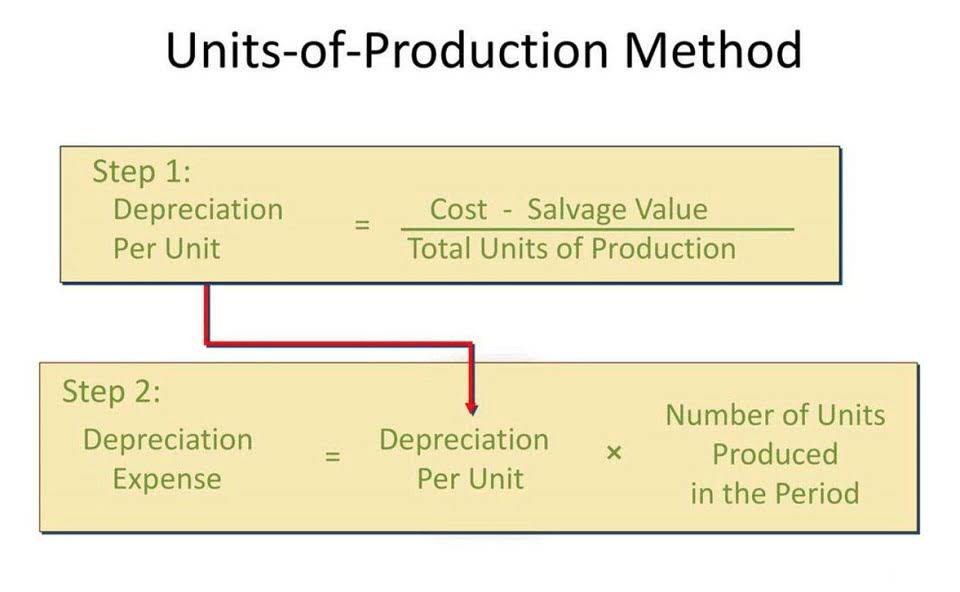
This shows the asset’s net book value on the balance sheet and allows you to see how much of an asset has been written off and get an idea of its remaining useful life. When depreciation is initially recorded as an expense on the company’s balance sheet, the accumulated depreciation is recorded as a credit to offset that expense. Other assets, like vehicles and equipment, typically depreciate more quickly under heavy use. In some years you may drive a lot, whereas in others you might put in fewer miles. In this case, a formula like the units-of-production method is better suited for representing the real accumulated depreciation of the fixed asset used.

Understanding How Accumulated Depreciation Amounts Are Shown as Deductions from Assets

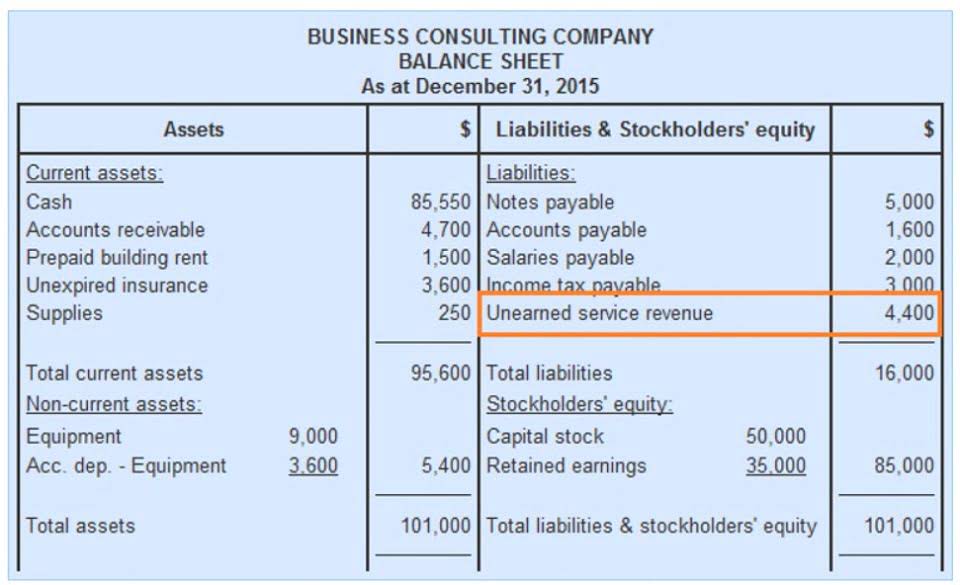
For example, machinery with a net book value of $50,000 might sell for $30,000 or $70,000 depending on market conditions. For tax purposes, the IRS requires businesses to depreciate most assets using the Modified Accelerated Cost Recovery System (MACRS). To illustrate, here’s how the asset section of a balance sheet might look for the fictional company, Poochie’s Mobile Pet Grooming. Accumulated depreciation is the total amount of depreciation expense that has been allocated to an asset since it was put in use. Sandra Habiger is a Chartered Professional Accountant with a Bachelor’s Degree in Business Administration from the University of Washington.

Suppose a company purchases a machine for $10,000 with a useful life of 5 years and no salvage value. Using the straight-line method, the annual depreciation expense would be $2,000 ($10,000 divided by 5 years). In addition to the above, accountants must also ensure that the depreciation schedule is updated regularly. As assets are acquired and disposed of, the depreciation schedule must be adjusted accordingly. Failure to update the depreciation schedule can result in inaccurate financial statements. They are responsible for ensuring that the depreciation schedule is accurate and up-to-date.

In this case, you may be able to find more details about the book value of the company’s assets and accumulated depreciation in the financial statement disclosures. These assets are usually expensive, and their value can increase or decrease over time. Real estate companies use the straight-line method of depreciation to allocate the cost of these assets over their useful life. However, they also take into account the carrying value of the asset, which is the asset’s value minus its accumulated depreciation.

It reduces the carrying value of assets on the balance sheet, which impacts metrics like book value, net income, and taxes. A contra asset isn’t an asset in the traditional sense – it’s a tool that offsets the original value of assets on the balance sheet. The accumulated depreciation appears under the property, plant, and equipment (PP&E) account which are long-term fixed assets that last over a year. For example, the Modified Accelerated Cost Recovery System (MACRS) in the U.S. allows accelerated depreciation, providing tax benefits in an asset’s early years.

  • Accumulated depreciation should be shown just below the company’s fixed assets.
  • Ultimately, selecting the most suitable depreciation method requires consideration of the asset’s nature, expected usage, and the most accurate reflection of its decline in value over time.
  • Check with your local tax authority to understand how depreciation affects you.
  • Accumulated depreciation is only relevant when it comes to long-term assets, because short-term assets aren’t in use long enough to experience wear and tear over time.

Depreciation and the Income Statement

Instead of recording the depreciation charge in the asset account and affecting the cost information, better way is to record the depreciation charge in a separate account. By the end of the period, the balance of asset account and total depreciation charge, better known as accumulated depreciation account, is set against each other to know the net book value of asset. This way we will always have the original cost of the asset and also the information related to total depreciation charged so far in the financial statements of the entity. On most balance sheets, accumulated depreciation appears as a credit balance just under fixed assets. In some financial statements, the balance sheet may just show one line for accumulated depreciation on all assets. Accumulated depreciation is a critical concept in accounting that plays a pivotal role in reflecting the true value of long-term assets on a company’s balance sheet.

Financial Reporting Implications

Other methods include Declining Balance Depreciation and Units of Production Depreciation, which allocate costs differently based on usage or time. You should consult your own professional advisors for advice directly relating to your business or before taking action in relation to any of the content provided. Here are some of the most commonly asked questions about accumulated depreciation.

Find out why organizations across 140+ sectors trust Asset Panda to track their valuable asset data and maintain their financial compliance. Discover how Asset Panda can meet your organization’s unique needs and request your personalized demo today. Using the straight-line method, you depreciation property at an equal amount over each year in the life of the asset. Where the depreciation rate is a multiple of the straight-line rate, typically 2 or 3. Once an asset is fully depreciated, its book value is equal to its salvage value.

This means it reduces the book value of an asset but does not directly impact cash flow. For instance, a company might move from the straight-line method to an accelerated method to better match an asset’s usage pattern. Such changes require recalculating accumulated depreciation, significantly impacting financial metrics and tax obligations. Proper documentation of these adjustments is essential for compliance with GAAP and IFRS. Accumulated depreciation is recorded in a contra-asset account, meaning it has a credit balance, reducing the fixed assets gross amount.

According to this method depreciation is a fixed percentage on its net book value each year. It is mostly used for machinery since it produces more during its first years of trading. Accumulated depreciation is the amount of economic value that has been depleted in the past. It is not a liability because the account balances do not represent a payment obligation to a third party. To calculate accumulated depreciation, there are 3 important factors you need to consider.

Get More From Accounting for Everyone With Weekly Updates

In summary, depreciation is an important concept in bookkeeping that helps businesses to accurately reflect the reduction in the value of their assets over time. By understanding the key concepts of depreciation, businesses can make informed decisions about the useful life of their assets, salvage value, and depreciation expense. Master accumulated depreciation methods and calculations with our expert guide, covering asset write-offs and financial reporting. It is a crucial element in financial statements, impacting the balance sheet of a company, and is recorded as a deduction from the asset’s original cost. But accumulated depreciation (and depreciation in general) does reduce taxable income, which lowers your tax liability.

  • Almost all of these fixed assets (except land or goodwill, which have indefinite useful lives) have a useful life, usually measured in years.
  • Explore how accumulated depreciation is classified on the balance sheet and its effect on asset valuation and financial reporting.
  • At H&CO, our experienced team of tax professionals understands the complexities of income tax preparation and is dedicated to guiding you through the process.
  • Accumulated depreciation is a non-cash transaction, which means that it doesn’t involve any actual cash movement but is still recorded for accounting purposes.
  • Although accumulated depreciation doesn’t qualify as an asset, it’s still recorded on the asset section of your balance sheet as a contra asset that reduces the value of the depreciating asset.

These standards require companies to evaluate asset recoverability and recognize impairment losses when necessary, further influencing NBV. Units refer to the total amount of units of output you expect from the asset (for a vehicle, you might expect to drive 100,000 miles, so you would have 100,000 total units. A company buys a machine for $50,000, with an expected useful life of 10 years and a salvage value of $5,000. Get free guides, articles, tools and calculators to help you navigate the financial side of your business with ease. The magic happens when our intuitive software and real, human support come together.

It is provided to spread the cost of using non-current asset over its useful life. The cost of non current assets comprises of its purchase price, including import duties and taxes and any costs directly attributable in bringing the asset to its present location and condition. Just enter the name of the fixed asset you want to depreciate, the method of depreciation, and the time interval you want to expense it in, and press Post. Instead, it is separately deducted from the asset’s value, and it is treated as a contra asset as it offsets the balance of the asset. Every year depreciation is treated as an expense and debited to the profit and loss account. Companies must regularly update depreciation schedules to reflect changes in asset use or economic conditions, keeping the balance sheet accurate.

Accumulated depreciation is total wear and tear in the value of assets to date. Accumulated is accumulated depreciation a non current asset depreciation is to be reduced from the asset’s book value to represent the true value of the asset. To answer this question, it’s essential to understand exactly what depreciation is and its value to businesses.

These are recorded on the statement of financial position, or commonly known as the balance sheet. Common examples of entities that typically have accumulated depreciation include buildings, machinery, equipment, vehicles, and other long-term items which extend a one-year life period. Depreciation is normal wear and tear in the asset’s value as the asset value gets depreciated with the usage and passage of time.

Accumulated depreciation refers to the cumulative depreciation expense recorded for an asset on a company’s balance sheet. It is determined by adding up the depreciation expense amounts for each year. A depreciation journal entry records the current depreciation amount as a debit to a Depreciation expense account and a credit to an Accumulated Depreciation contra-asset account.


  • 0

What Are Assets? Definition and Examples

Category : Bookkeeping

From an accounting perspective, the showroom cannot show the new vehicle in its accounting books until the day it has gotten control of the asset (i.e., on 5 January 2021). An asset is something of economic value that’s owned or controlled by a person, a company, or a government. It’s something that’s owed to another person, company, or government. Examples of liabilities include loans, tax obligations, and accounts payable.

  • This integration helps maintain accurate financial and inventory records, reducing the risk of discrepancies.
  • Individuals can accumulate assets in order to build up their personal wealth.
  • This feature ensures that asset values are updated accurately on financial statements, keeping your records in compliance with accounting standards.
  • If the camera was used for any other purpose (e.g. photography of products) it would be classified as a non-current asset.
  • Assets are very important for business operations, investments, and value creation.

Classifying your current, noncurrent, intangible, financial, operating, and non-operating assets accurately gives you clearer insight into the value of your company. This improves your ability to conduct financial planning, attract investors, and achieve compliance. Usage distinguishes assets you require for daily operations from other assets you could convert into cash but don’t need to run your business. For example, you may have both operating and non-operating assets that fall under current assets.

How to Calculate Assets?

An asset is a resource that an individual, corporation, or country owns or controls with the expectation that it will provide a future economic benefit. Assets are an organization’s resources that yield future benefits, while liabilities are debts, or obligations that the business is obligated to pay in the future. ROA is a key indicator of how efficiently a company is utilizing its assets to produce profit.

Assets, Defined

  • For example, cash, accounts receivable, building, plant and equipment, goodwill, and patents.
  • A receivable will be classified as impaired if there’s evidence that it might be uncollectible.
  • Fixed assets are resources with an expected life of more than a year, such as plants, equipment, and buildings.

For example, a jewelry or art collection are both tangible assets a person might have. However, the concept of tangible assets most frequently appears in a business context. Financial assets can include stocks, corporate and government bonds, and other types of securities. They tend to be liquid unlike fixed assets and they’re valued according to their current price on the relevant market.

The articles and research support materials available on this site are educational and are not intended to be investment or tax advice. All such information is provided solely for convenience purposes only and all users thereof should be guided accordingly. Debt is represented by liabilities, while equity represents the owners’ investment in the company. An asset can be used to generate value for a business or individual.

Determine Asset Value Based on Classification

A personal balance sheet provides a snapshot of how you’re doing financially. These can be to individuals, businesses, or even organizations, like the government (think taxes). Other examples of personal liabilities could include credit card balances, loans, and mortgages. The components of a balance sheet include assets, liabilities, and equity. Assets are resources the organization can use to achieve its objectives. Liabilities, on the other hand, represent obligations to other parties.

Assets Definition

The word asset is derived from the Latin ad satis, which means “to sufficiency.” They’re typically used to help measure a person’s wealth and can be helpful when applying for a loan or planning for retirement. Personal assets give an individual a clear picture of what they own and the value. You may have seen recent news coverage of customers of financial services companies falling victim to social engineering scams. Scammers impersonate a trusted company to convince their targets into revealing or handing over sensitive information such as insurance, banking or login credentials.

They encompass all the physical assets a company owns or controls, are directly involved in its day-to-day operations, and represent a significant portion of its overall value. Individuals can accumulate assets in order to build up their personal wealth. For example, they could obtain cash, cash equivalents, stocks, bonds, and real estate.

These assets are not reflected on the balance sheet but may be included in other financial statements. Land and other types of real estate, including buildings, are generally considered assets. Keep in mind that your net worth can change as the values of your assets and liabilities change. For example, the market value of your house might increase or decrease over time. And knowing the value of your assets versus the value of your liabilities can tell you your net worth, one measure of financial health. Understanding the relationship between assets and liabilities is a vital part of building wealth and having financial security.

They are usually categorized as either tangible or intangible, based on their physical presence. Assets are very important for business operations, investments, and value creation. Assets are resources owned by an individual, business, or organization that hold economic value and can contribute to future financial benefits.

Since only one month would have passed by 31 December out of the three-month period covered by the advance, two months’ rent will be recognized as a prepaid asset in the balance sheet. If the camera was used for any other purpose (e.g. photography of products) it would be classified as a non-current asset. An asset whose value cannot be measured is not shown in the balance sheet. Like all accounting, assets are recognized when a past transaction establishes control over the asset. A business should be able to obtain benefits from an asset and restrict its access to others.

Ideally, if one component of your portfolio falls in value, the other parts will appreciate, making up for this loss. A highly diversified portfolio could contain many different asset classes, including stocks, bonds, commodities, and real estate, for example. A tangible asset could be anything from cash in your bank account to your car or home furniture. If you can asset description example physically touch and measure it, it’s probably a tangible asset. Assets can be crucial resources for both individuals and businesses.

An asset is anything that can generate value for a business or individual. Physical assets, such as land, buildings, machinery, vehicles, and inventory are tangible. In this context, cash might include physical money and funds in checking and savings accounts, retirement accounts, and investment accounts. Understanding business assets can help you as an individual if you have your own business or even a side hustle and need to account for those assets in your estate planning. The idea behind diversification is not putting all your eggs in one basket.

Assets are one of the key building blocks of accounting that holds the entire accounting equation together. What’s considered useful life varies according to the type of asset. The Internal Revenue Service (IRS) assigns office furniture and fixtures a useful life of seven years under the general depreciation system (GDS). Our writing and editorial staff are a team of experts holding advanced financial designations and have written for most major financial media publications.

Learning about the different types of assets, their characteristics, and how they differ from liabilities is important for sound financial management. Properly managing assets leads to increased profitability, improved operations, and enhanced financial standing for any business. An asset refers to any valuable resource owned by an entity, which can be used to generate income, support operations, or appreciate over time. Assets can be physical, like property or equipment, or intangible, like intellectual property or goodwill.


  • 0

Accounting For Bonds Payable

Category : Bookkeeping

So, we know that we’re going to be paying interest tomorrow on January 1st. So, we have this liability to pay $2,250, for the 6 months that have passed. The discount on bonds payable is going to keep decreasing here, right? Over the life of the bonds, the $2,000 discount would be gradually amortized to Interest Expense, thus increasing the total interest cost of the bonds for ABC Corporation. The Discount on Bonds Payable balance decreases over time until it reaches $0 when the bonds mature.

Journal Entry of Discount on Bond Payable

The $3,851 ($96,149 present value vs. $100,000 face value) is referred to as Discount on Bonds Payable, Bond Discount, Unamortized Bond Discount, or Discount. Use the semiannual market interest rate (i) and the number of semiannual periods (n) that were used to calculate the present value of the interest payments. Next, let’s assume that just prior to offering the bond to investors on January 1, the market interest rate for this bond increases to 10%.

At the same time, the carrying value of the Bonds Payable (Bonds Payable minus Discount on Bonds Payable) increases from the issue price ($98,000) to the face value ($100,000). When we issue a bond at a premium, we are selling the bond for more than it is worth. We always record Bond Payable at the amount we have to pay back which is the face value or principal amount of the bond. The difference between the price we sell it and the amount we have to pay back is recorded in a liability account called Premium on Bonds Payable.

Discount Bonds:Repaying Principal at Maturity

And what that’s going to be doing is going to be increasing the value of the bond as we keep crediting to these liabilities. We’re going to credit discount on bonds payable, and I’m going to put discount on BP for bonds payable. So we’re going to be crediting the discount account because remember, up here, when we first issued the bonds, it had a debit balance, right?

This means that the corporation will be required to make semiannual interest payments of $4,500 ($100,000 x 9% x 6/12). When a corporation prepares to issue/sell a bond to investors, the corporation might anticipate that the appropriate interest rate will be 9%. If the investors are willing to accept the 9% interest rate, the bond will sell for its face value.

Amortizing Premiums and Discounts

The market value of an existing bond will fluctuate with changes in the market interest rates and with changes in the financial condition of the corporation that issued the bond. For example, an existing bond that promises to pay 9% interest for the next 20 years will become less valuable if market interest rates rise to 10%. Likewise, a 9% bond will become more valuable if market interest rates decrease to 8%. When the financial condition of the issuing corporation deteriorates, the market value of the bond is likely to decline as well.

  • Bonds that do not have specific collateral and instead rely on the corporation’s general financial position are referred to as unsecured bonds or debentures.
  • The discount represents the difference between the bond’s face value and its selling price.
  • Each semiannual interest payment will be $4,500 ($100,000 x 9% x 6/12).

Summary of the Effect of Market Interest Rates on a Bond’s Issue Price

This discount arises when bonds are issued below their face value, and the amortization serves to align the book value of the bond with its principal amount due at maturity. The implications of this process are multifaceted, affecting not only the issuer’s financial statements but also the yield received by investors. Contra accounts play a pivotal role in the financial reporting and analysis of bond discounting. Essentially, these accounts serve as the balancing figures that align the book value of bonds with their face value over time. When a company issues bonds at a discount, it means the bonds are sold for less than their face value.

  • The $50,000 discount ($1,000,000 – $950,000) represents additional interest that the company will effectively pay to bondholders over the bond’s life.
  • We calculate these two present values by discounting the future cash amounts by the market interest rate per semiannual period.
  • This would be recorded as a debit to Cash for $1,780, a debit to Discount on Bonds Payable for the difference, $220, and a credit to Bonds Payable for $2,000.
  • We will use the Present Value of 1 Table (PV of 1 Table) for our calculations.

The corporation must continue to pay $4,500 of interest every six months as promised in its bond agreement ($100,000 x 9% x 6/12) and the bondholder will receive $4,500 every six months. Since the market is now demanding only $4,000 every six months (market interest rate of 8% x $100,000 x 6/12 of a year) and the existing bond is paying $4,500, the existing bond will become more valuable. In other words, the additional $500 every six months for the life of the 9% bond will mean the bond will have a market value that is greater than $100,000.

Understanding the Concept of Bond Discount

When coupon rate is lower than market rate, company must calculate the market price of bonds. They will use the present value of future cash flow with market rate to calculate the bond selling price. In order to attract investors, company needs to sell bond at $ 94,846 only. The accounting method under which revenues are recognized on the income statement when they are earned (rather than when the cash is received). There are various fees that a corporation must pay when issuing bonds. These fees include payments to attorneys, accounting firms, and securities consultants.

It is reasonable that a bond promising to pay 9% interest will sell for less than its face value when the market is expecting to earn 10% interest. In other words, the 9% $100,000 bond will be paying $500 less semiannually than the bond market is expecting ($4,500 vs. $5,000). Since investors will be receiving $500 less every six months than the market is requiring, the investors will not pay the full $100,000 of a bond’s face value.

To illustrate the premium on bonds payable, let’s assume that in early December 2023, a corporation has prepared a $100,000 bond with a stated interest rate of 9% per annum (9% per year). The bond is dated as of January 1, 2024 and has a maturity date of December 31, 2028. The bond’s interest payment dates are June 30 and December 31 of each year.

Things that are resources owned by a company and which have future economic value that can be measured and can be expressed in dollars. Examples include cash, investments, accounts receivable, inventory, supplies, land, buildings, equipment, and vehicles. The accounting term that means an entry will be made on the left the discount on bonds payable account side of an account.

The choice of method has implications for financial reporting and tax purposes. Contra accounts are not merely a technicality of accounting; they provide essential insights into the financial health and performance of an entity. By accurately reflecting the cost of borrowing and the value of bond liabilities, contra accounts ensure that stakeholders can make informed decisions based on transparent and meaningful financial information. The careful monitoring and management of these accounts are vital for both internal decision-making and external reporting.


  • 0

Bank Reconciliation Statement Format In Excel Inbuilt Formulas

Category : Bookkeeping

There are also a wide variety of templates available for specific industries, such as real estate, marketing, human resource, Payroll management and among others. One advantage of bank reconciliation template excel using professional Excel templates is that they are often designed by experienced professionals who understand best practices for data management and visualization. This means that the templates are likely to be well-organized, easy to understand, and aesthetically pleasing, which can make working with them more efficient and enjoyable. The final part of the template provides an adjusted balance as per the depositor and the bank statement. What’s more, it provides sections for noting down any transactions not yet reflected in your bank statement, both incoming and outgoing. Easily integrate with ERPs and other financial systems, ensuring real-time data synchronization and eliminating data silos.

Why Choose Our Excel Templates?

Going through the bank reconciliation process can identify errors and unrecorded transactions. Companies or individuals can use this general ledger (GL) reconciliation template for bank reconciliation. Businesses can also use it for reconciling balance sheet accounts, such as accounts payable, by editing the template to show the appropriate account information. Enter the balance from your bank statement or subledger along with the general ledger balance, and adjust amounts based on outstanding deposits and checks.

Free Excel bank reconciliation statement that will help you match transactions, track your reconciliation, and provide useful formulas and tips. Usually, the balances as per the statement and the company’s records are not the same. This is due to deposits in transit, outstanding checks, bank charges, interest earned or paid, etc. Bank reconciliation using Excel is not fully automatic, but many companies continue to rely on Excel-based bank reconciliation templates since they are often free and easy to use. Although Excel-based bank reconciliation templates sound prehistoric, they have several benefits over manual reconciliation. Reconcile a business credit card account with transaction receipts, and create an expense report for documentation.

How Does Intercompany Reconciliation Software Work?

  • Companies or individuals can use this general ledger (GL) reconciliation template for bank reconciliation.
  • The Smartsheet platform makes it easy to plan, capture, manage, and report on work from anywhere, helping your team be more effective and get more done.
  • The Bank Reconciliation Form is like having your own personal accountant, helping you avoid any potential discrepancies between your bank statement and your own records.
  • Additionally, assumptions have been made surrounding the nature of the reconciling items, changes in these assumptions could impact how the entry is recorded.
  • User can only download and use the excel templates for their Personal use only.

Imagine a situation where your company’s accounting system shows a bank balance of $10,000, but the bank’s statement shows $8,000. This discrepancy could be due to outstanding checks that haven’t been cashed yet, a deposit in transit not yet accounted for by the bank, or it could be a result of an error in your books. By preparing a Bank Reconciliation Statement, you can identify the reason for this difference and make the necessary adjustments, ensuring your records accurately reflect your actual bank balance. Are you tired of sifting through mountains of bank statements and transaction records, trying to make sense of it all? We’ve all been there – that overwhelming feeling of confusion when it’s time to reconcile your bank accounts.

Year-end Accounting Checklist: Close the Fiscal Year Early

They ensure accuracy, detect errors and irregularities, safeguard against fraud, and enable regulatory compliance. Regular reconciliation allows businesses to detect and correct errors in financial records. These errors may include miscalculations, duplicate transactions, or missing entries that can lead to incorrect cash flow assessments. A simple bank reconciliation template streamlines this process by providing a systematic approach to verifying and updating records. Download this bank reconciliation template and incorporate it into your month-end close process. A bank reconciliation is a check between your records (or your company’s) and the banks records.

Download Bank Reconciliation Statement Template In Excel

With fresh templates uploaded daily, we aim to meet every conceivable Excel need you may have. Whether you’re a student, a business professional, or someone looking to make sense of their data, our range of templates has you covered. Dive into the world of Excel Templates today and transform your number-crunching experience into an effortless journey of discovery and efficiency. Overall, free editable professional Excel templates can be a valuable resource for anyone looking to improve their data management and analysis skills.

Financial Calculator

It’s designed to help you record your starting balance, deposits, and withdrawals over time, all in a clear and straightforward manner. Designed by the London Borough of Hammersmith and Fulham, it’s a must-have for anyone wanting to keep their finances in order. You’ll be able to track your bank balance, total money paid in and out, and reconcile your balance with your bank statement. It’s perfect for those who want to ensure the accuracy of their financial statements, track discrepancies, and maintain proper control over their cash flow. Gain full visibility into the close process with AI-driven analytics and reporting. Interactive dashboards should provide drill-down capabilities, highlighting key bottlenecks and trends.

Its real-time financial updates and strong integrations with banks make it highly scalable. However, its reconciliation customization is limited, making it less suitable for enterprises with complex financial structures. This is a bigger problem with companies with high volume and quick turnaround times. Reconciling 100s of transactions can take days to resolve completely.You can reduce the reconciliation process to minutes using automation software. This would require aggregating data from multiple financial sources, extracting relevant data from documents, matching data across different sources, and fraud checks.

This Bank Reconciliation Template from the CFI Team for Excel is an excellent resource for businesses or individuals who need to reconcile their bank statements with their own financial records. Xero is a user-friendly reconciliation solution designed for small to medium-sized businesses. It features automated bank feeds, AI-driven transaction matching, and bulk reconciliation, reducing manual work and improving financial accuracy.

The Account Reconciliation Template for Excel from the University of Calgary is your go-to resource for ensuring the integrity of your financial transactions. Perfect for both personal and business use, this template makes it easy to properly code items into correct accounts and check the age of each item. The template is straightforward and easy to use, with fields for cash balance, deposits in transit, outstanding checks, receivables collected by the bank, interest earned, and other deductions. For example, if a parent company sells goods to its subsidiary, both must record the transaction correctly. Reconciliation ensures that the revenue recorded by one entity matches the expense recorded by the other, preventing imbalances in consolidated financial statements.

A payroll journal entry template is an essential tool for accurately recording all financial transactions related to employee compensation within a company’s general ledger. This template ensures that every aspect of payroll—including gross wages, tax withholdings, benefit deductions, and employer contributions—is systematically documented. By maintaining precise payroll journal entries, businesses can uphold financial transparency, comply with regulatory requirements, and provide stakeholders with a clear view of payroll expenses. Bank reconciliation involves comparing your accounting and financial records with your bank activity to ensure the transactions and balances match. It’s an essential part of audits, tax preparation, and accurate recordkeeping. Enterprise-level organizations conduct frequent bank reconciliations to comply with regulatory requirements and internal controls.

Individuals can also reconcile monthly bank statements with personal records to make sure they know their actual bank account balance and avoid overdrafts. It provides a structured layout where you can input and compare the transactions recorded in the bank statement with those in your accounting system. This is your shortcut to maintaining an accurate cash balance, ensuring that every transaction is accounted for and discrepancies are swiftly addressed. The purpose of a bank reconciliation template is to help individuals or businesses reconcile their bank statements with their internal financial records.

  • Bank reconciliation templates help you identify record mismatches, but AI-based bank reconciliation software can go one step ahead and even match records where only partial data is available.
  • This reduces manual data collection efforts and ensures consistency across financial records.
  • While highly accurate and efficient, it may require customization to meet specific business needs and is generally more suited for enterprises rather than small businesses.
  • Going through the bank reconciliation process can identify errors and unrecorded transactions.
  • This bank reconciliation template is an update from an earlier file that was made three years ago.

There could be items included that are not relevant to your situation, or items missing that will be necessary for your reconciliation. Additionally, assumptions have been made surrounding the nature of the reconciling items, changes in these assumptions could impact how the entry is recorded. This process is typically performed monthly for efficiency and to prevent errors from carrying over from one month or year to the next. Accounts payable reconciliation may be done manually or with software, depending on the size of your business and accounting needs. The template comes with easy-to-follow instructions and dedicated support to ensure a smooth and efficient bank reconciliation process. This Checkbook Reconciliation Template for Google Sheets is a user-friendly way to keep track of your financial transactions.


  • 0

How to calculate depreciation

Category : Bookkeeping

Such a change is useful if your decisions to grow your business involve different assets needing varied approaches. Generally, changes are allowed if they’re beneficial for tax purposes in the second year or later, but they’re also subject to eligibility and IRS rules. Depreciation is just an accounting method to show the expense of using an asset over time. It doesn’t have anything to do with how you purchased the item, its real physical condition, or the number of years it’s actually used in your business.

The basis for depreciation on the house is the FMV on the date of change ($165,000) because it is less than Nia’s adjusted basis ($178,000). If you construct, build, or otherwise produce property for use in your business, you may have to use the uniform capitalization rules to determine the basis of your property. 551 and the regulations under section 263A of the Internal Revenue Code. You can choose to use the income forecast method instead of the straight line method to depreciate the following depreciable intangibles.

The house is considered placed in service in July when it was ready and available for rent. You cannot depreciate a term interest in property created or acquired after July 27, 1989, for any period during which the remainder interest is held, directly or indirectly, by a person related to you. A term interest in property means a life interest in property, an interest in property for a term of years, or an income interest in a trust. If you use property for business or investment purposes and for personal purposes, you can deduct depreciation based only on the business or investment use. For example, you cannot deduct depreciation on a car used only for commuting, personal shopping trips, family vacations, driving children to and from school, or similar activities.

  • On October 26, 2023, Sandra and Frank Elm, calendar year taxpayers, bought and placed in service in their business a new item of 7-year property.
  • These items include buildings, improvements to your property, vehicles, and all kinds of equipment and furniture.
  • Depending on the method used, the amount may be the same every year.
  • Make & Sell, a calendar year corporation, set up a GAA for 10 machines.
  • However, in the units-of-activity method (and in the similar units-of-production method), an asset’s estimated useful life is expressed in units of output.

Ellen used it only for qualified business use for 2020 through 2023. Ellen claimed a section 179 deduction of $10,000 based on the purchase of the truck. Ellen began depreciating it using the 200% DB method over a 5-year GDS recovery period. The pickup truck’s gross vehicle weight was over 6,000 pounds, so it was not subject to the passenger automobile limits discussed later under Do the Passenger Automobile Limits Apply. During 2024, Ellen used the truck 50% for business and 50% for personal purposes.

When a business buys equipment, reporting the full value as an expense right away could make even profitable companies appear as if they’re losing money. Thus, companies often use depreciation—an accounting method that spreads these big-ticket expenses over time. During the year, you made substantial improvements to the land on which your rubber plant is located. You check Table B-1 and find land improvements under asset class 00.3. You then check Table B-2 and find your activity, producing rubber products, under asset class 30.1, Manufacture of Rubber Products.

You make a $20,000 down payment on property and assume the seller’s mortgage of $120,000. Your total cost is $140,000, the cash you paid plus the mortgage you assumed. However, computer software is not a section 197 intangible and can be depreciated, even if acquired in connection with the acquisition of a business, if it meets all of the following tests. You generally cannot use MACRS for real property (section 1250 property) in any of the following situations. James Elm is a building contractor who specializes in constructing office buildings. James bought a truck last year that had to be modified to lift materials to second-story levels.

Qualified Reuse and Recycling Property

The use of property to produce income in a nonbusiness activity (investment use) is not a qualified business use. However, you can treat the investment use as business use to figure the depreciation deduction for the property in a given year. You must determine the gain, loss, or other deduction due to an abusive transaction by taking into account the property’s adjusted basis. The adjusted basis of the property at the time of the disposition is the result of the following.

The units of production depreciation method

Straight-line depreciation is the most common method used by businesses. It is a simple method that evenly distributes the cost of an asset over its useful life. To calculate the annual depreciation expense, the cost of the asset is divided by the number of years of its useful life. Declining balance depreciation involves applying a fixed percentage to the remaining book value of the asset each year. This method results in higher depreciation expense in the early years of an asset’s life and lower depreciation expense in later years.

When using the straight line method, you apply a different depreciation rate each year to the adjusted basis of your property. You must use the applicable convention in the year you place the property in service and the year you dispose of the property. The following table shows the declining balance rate for each property class and the first year for which the straight line method gives an equal or greater deduction. During the year, you bought a machine (7-year property) for $4,000, office furniture (7-year property) for $1,000, and a computer (5-year property) for $5,000. You placed the machine in service in January, the furniture in September, and the computer in October.

You placed both machines in service in the same year you bought them. They do not qualify as section 179 property because you and your father are related persons. You cannot claim a section 179 deduction for the cost of these machines. However, to determine whether property qualifies for the section 179 deduction, treat as an individual’s family only their spouse, ancestors, and lineal descendants and substitute “50%” for “10%” each place it appears. To qualify for the section 179 deduction, your property must have been acquired by purchase.

What is a depreciation schedule?

Depending on the method used, the amount may be the same every year. Or, it may be larger in earlier years and decline annually over the life of the asset. Depreciation is the method of calculating the cost of an asset over its lifespan. Calculating the depreciation of a fixed asset is simple once you know the formula.

  • Let’s say you need to determine the depreciation of a delivery truck.
  • Residential rental property and nonresidential real property are defined earlier under Which Property Class Applies Under GDS.
  • Assume for all the examples that you use a calendar year as your tax year.
  • The most widely-used method is Straight-Line depreciation, which depreciates the same amount of money each year and is relatively easy to use.
  • For the 2024 tax year, bonus depreciation lets you deduct 80% of an eligible asset’s cost upfront, down from 100% in previous years due to the bonus depreciation phase-out.

Scenario Planning With Depreciation

Step 4—Using $20,000 (from Step 3) as taxable income, XYZ’s hypothetical charitable contribution (limited to 10% of taxable income) is $2,000. Step 1—Taxable income figured without either deduction is $1,220,000. In addition, figure taxable income without regard to any of the following.

Double-declining balance depreciation method

The IRS is committed to serving taxpayers with limited-English proficiency (LEP) by offering OPI services. The OPI Service is a federally funded program and is available at Taxpayer Assistance Centers (TACs), most IRS offices, and every VITA/TCE tax return site. Go to IRS.gov/SocialMedia to see the various how to depreciate social media tools the IRS uses to share the latest information on tax changes, scam alerts, initiatives, products, and services. Don’t post your social security number (SSN) or other confidential information on social media sites. Always protect your identity when using any social networking site.

Learn more from an Asset Panda expert

Because you’ve taken the time to determine the useful life of your equipment for depreciation purposes, you can make an educated assumption about when the business will need to purchase new equipment. The earlier you can start planning for that purchase — perhaps by setting aside cash each month in a business savings account — the easier it will be to replace the equipment when the time comes. Here are four common methods of calculating annual depreciation expenses, along with when it’s best to use them. Businesses have some control over how they depreciate their assets over time. Good small-business accounting software lets you record depreciation, but the process will probably still require manual calculations.

Usually, a percentage showing how much an item of property, such as an automobile, is used for business and investment purposes. The total of all money received plus the fair market value of all property or services received from a sale or exchange. The amount realized also includes any liabilities assumed by the buyer and any liabilities to which the property transferred is subject, such as real estate taxes or a mortgage.


Categories